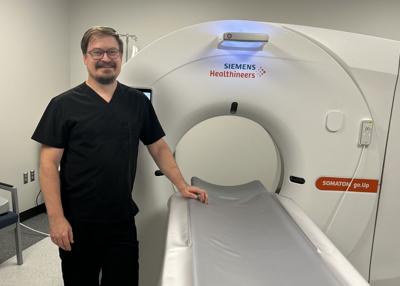


November is Lung Cancer Awareness Month, and Outpatient Radiology Scottsbluff (OPR Scottsbluff) is addressing frequently asked questions to clarify how their facility plays a key part in a patient’s lung screening journey. Lung cancer is the leading cause of cancer death in the U.S.; however, at-risk patients can take a proactive approach to their lung health by getting low-dose CT scans.
What makes a patient at risk? What is a low-dose CT scan? OPR Scottsbluff answers these questions and more to help empower the community to take action in their lung health.
Who is considered high risk?
Did you know it is possible to develop lung cancer without smoking? Although smoking is the primary risk factor for lung cancer, other risk factors for nonsmokers include secondhand smoke, exposure to asbestos, certain metals (arsenic, cadmium, chromium), radon, air pollution and diesel exhaust. Patients who are considered high-risk and can qualify for a low-dose CT scan for lung cancer screening include:
People who are 50 to 80 years old.
People who currently smoke or have quit in the last 15 years.
People who smoke a minimum of 20 packs per year.
What screenings are recommended for lung cancer?
Lung cancer is one of the deadliest forms of cancer in the U.S. and is the leading cause of cancer death in Nebraska. Regular screenings for lung cancer can detect cancer early, when it’s most treatable, and therefore improve survival outcomes. Through a low-dose CT scan, high-risk patients can reduce lung cancer mortality by 20%. Most people don’t develop symptoms until the cancer has grown or spread. Thus, screenings through low-dose CT are critical in detecting cancer at a treatable stage.
What is a low-dose CT scan?
A low-dose CT scan uses X-rays to create detailed images of the lungs to screen for lung cancer in high-risk patients. The screening works just like a regular CT scan, but with a much lower amount of radiation. The noninvasive scan is completed in 15 minutes or less and requires no needles, dyes or preparation. After the scan, the radiologist will review the images and send a report to the patient’s primary care physician. A doctor’s order for this scan is required.
What role does OPR Scottsbluff play?
OPR Scottsbluff’s comprehensive lung cancer screening program takes a patient-centered approach, focused on early detection. OPR Scottsbluff is accredited by the American College of Radiology in CT imaging, which means they hold high standards while providing the highest-quality CT scans. Their team uses the latest technology to provide answers and hope for patients at risk of lung cancer. Should cancer be detected, their team works closely with the patient’s oncology team to ensure a seamless cancer care plan. A doctor’s order is required for a low-dose CT scan.
“If you're worried about lung cancer, a low-dose CT lung cancer screening can provide peace of mind because early detection leads to better outcomes. Most scans come back negative, meaning no cancer was found; however, lung cancer can go undiagnosed for a long time because symptoms usually do not appear until the cancer has spread, which is why screening is so important,” said Dr. Michael Yung.
This Lung Cancer Awareness Month, Outpatient Radiology Scottsbluff encourages patients to talk with their doctor about their risk factors and whether they’re eligible for a low-dose CT scan. To learn more and schedule your CT with OPR Scottsbluff (with a doctor’s order), visit oprscottsbluff.com.