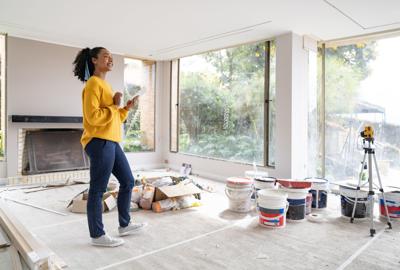


A renovation is two projects at once. There's the construction itself, which the contractor handles, and there's the part nobody warns you about: actually living in your house while the work happens around you. Dust in places you didn't know dust could reach, a kitchen reduced to a microwave on a folding table, and a routine that has to bend around a crew arriving at 7 a.m. The construction has a plan. Your daily life usually doesn't — unless you make one.
Homeowners who get through a remodel without burning out tend to share one habit: they treat their own logistics as seriously as the build. A little planning before the first wall comes down turns a stressful stretch into a manageable one.
Decide Early: Stay or Go
The first real question is whether you'll live in the home during the work or move out temporarily. For a single-room project like a guest bath, staying is usually fine. For a whole-floor gut or anything that knocks out the only kitchen or only bathroom for weeks, a short-term rental or a stay with family can be cheaper than it looks once you factor in restaurant meals, lost sleep, and the toll on everyone's patience.
People are also reading…
If you stay, set up a livable substitute for whatever room is offline. A temporary kitchen with a microwave, a hot plate, a mini-fridge, and a dishwashing station in a bathroom sink makes a kitchen remodel survivable. Knowing the answer to stay-or-go before demolition begins prevents the worst kind of mid-project scramble.
Contain the Dust and Protect Your Stuff
Renovation dust travels. A good crew will seal off the work zone with plastic sheeting and run the right air filtration, but it's worth confirming that's in the plan rather than assuming it. Cover or relocate furniture near the work area, take down anything fragile from shared walls, and keep an eye on the HVAC — closing off return vents in the work zone keeps fine debris from circulating through the whole house.
A few small moves make a big difference: a doormat at the edge of the work area, a dedicated entry for the crew if possible, and a daily ten-minute cleanup expectation written into the conversation with your contractor.
Set the Ground Rules With Your Contractor
Most renovation friction comes from mismatched expectations, not bad work. Before the project starts, agree on the basics: start and stop times, where the crew parks, which bathroom they'll use, how they'll communicate changes, and who you call when something comes up. Ask how they'll handle the inevitable surprise — the rotted subfloor or the wiring that isn't up to code — because how change orders get priced and approved is where budgets quietly slip.
Why So Many Homeowners Decide It's Worth It
Living through a remodel is a real inconvenience, and yet people keep choosing to do it. In Rocket Mortgage's data on home renovations, homeowners were asked a hypothetical question — whether they'd put $20,000 toward a home renovation or a dream vacation — and 75% chose the renovation. It's a what-if, not a record of actual spending, but it captures something true about the trade-off: a few weeks of disruption in exchange for a home that fits better for years tends to feel like a fair deal once it's over.
Budget for the Disruption, Not Just the Build
The contractor's estimate covers materials and labor. It does not cover the cost of living through the project, and that line item is easy to forget. Build a cushion for restaurant meals, possible temporary lodging, extra cleaning, and a 15% to 20% contingency for the surprises that nearly every renovation produces once walls open up.
For homeowners financing the work, this is where a little structure helps. A HELOC or home equity loan lets you draw what you need as the project unfolds, and a cash-out refinance can roll the whole cost into one predictable monthly payment. A lender can walk through the options so the financing matches the project's timeline rather than forcing you to pay for everything up front.
Keep the Finish Line in View
The hardest stretch of any renovation is usually the middle, when the demolition mess is real but the new space hasn't taken shape yet. It helps to keep a simple checklist of what's left and to celebrate the small milestones — the day the tile goes in, the day the appliances arrive. The disruption is temporary. The result, if you've planned both the build and your own logistics, is a home that works the way you wanted it to. That's the part that lasts.